


Benefits, Limitations & CRM Automation for Businesses
1. AI Chatbots Are Everywhere, But Do They Actually Work?
Open almost any business website today and a chat bubble greets you within seconds. AI chatbots have moved from an experimental add-on to a technology businesses increasingly consider for customer service, lead qualification and automation.
But a chatbot answering FAQs is the least interesting thing it can do. The real question isn’t whether chatbots work, it’s whether your website is set up to use one properly.
2. What a Modern Website Chatbot Can Actually Do?
A well-built chatbot can go far beyond “How can I help you?” It can:
- Answer questions 24/7, including outside office hours
- Qualify leads by asking about budget, timeline or needs
- Collect contact details before a human gets involved
- Recommend products or services based on visitor intent
- Book consultations or appointments
- Route enquiries to the right department or salesperson
- Trigger follow-up workflows after a conversation
The goal is not simply to automate conversation. It is to automate useful next steps.
3. Chatbot + CRM: Where It Gets Interesting
This is where many businesses miss the bigger opportunity. A chatbot sitting alone on a website is essentially a conversational interface. Its value increases when it connects to the systems that handle the next step.
A qualified conversation can become a CRM record, trigger a notification, assign a salesperson, apply a lead tag, or start an automated follow-up sequence.
The chatbot is not the system. It is the first step in the system.
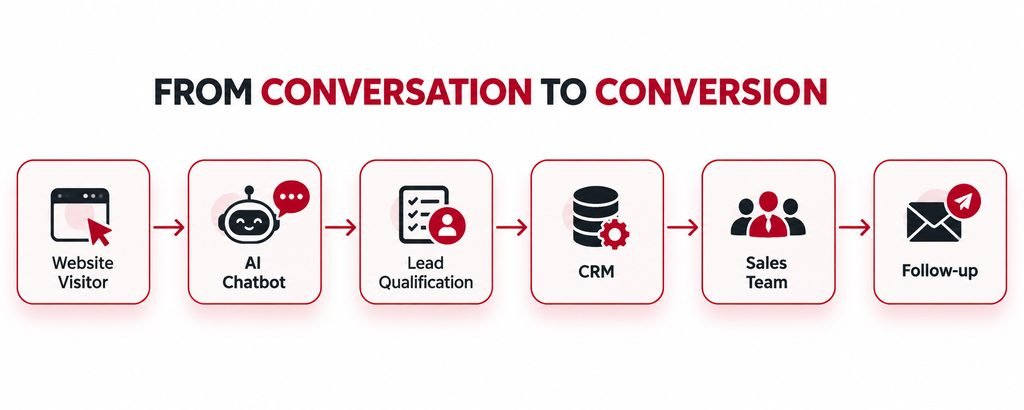
Figure 1. A connected chatbot-to-CRM lead workflow.
4. AI Chatbot vs. AI Agent: What’s the Difference?
A traditional chatbot is usually designed to answer questions, guide visitors and handle defined conversations. AI agents can go further by understanding context, making decisions and taking actions across connected systems.
For many businesses, a well-designed chatbot plus CRM automation is still enough. The important question is not whether a business needs the newest AI terminology, it is what tasks actually need to be automated.
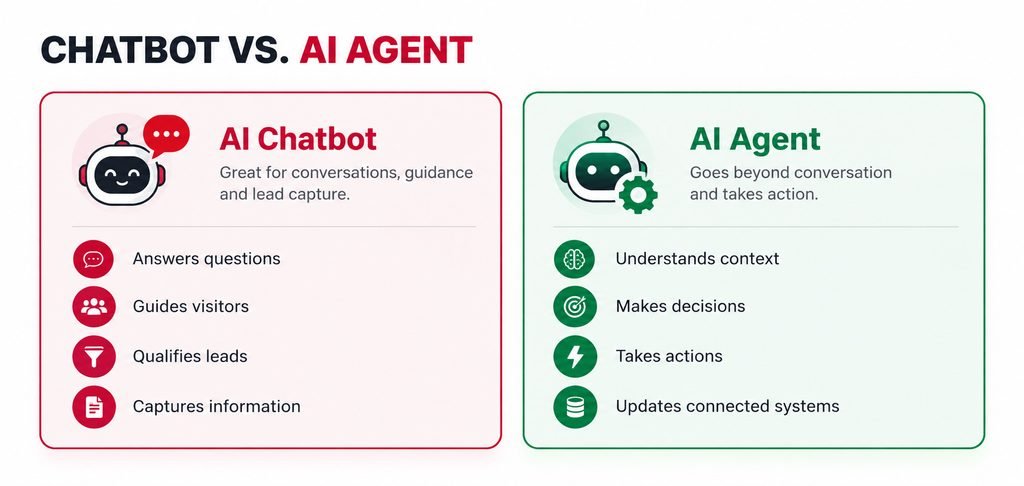
Figure 2. A practical distinction between chatbot and AI-agent capabilities.
5. When an AI Chatbot Is NOT a Good Idea
An AI chatbot is not automatically the right investment for every website.
• Website traffic is too low. Automating conversations you do not have yet does not solve a visibility problem.
• Customer questions are highly specialised. Expert judgment may still be required for complex B2B enquiries.
• Website content is outdated. A chatbot using stale information can create more problems than it solves.
• There is no human handoff. Visitors should have a clear way to reach a person when AI cannot resolve the issue.
• There is no CRM or lead process behind it. Capturing a lead is only useful if someone or something acts on it.
The stakes of getting this wrong are real: Gartner found that only 27% of customers would try a chatbot again after a negative experience with one. A poorly configured chatbot doesn’t just fail to help, it can quietly push a visitor away from the brand altogether.
6. AI vs. Human: You Don’t Have to Choose
The most practical approach is often a combination of AI and human support. AI can handle repetitive questions, identify intent, collect information and perform routine tasks. Human teams can take over when the conversation becomes complex, high-value or sensitive.
Gartner’s 2026 research found that 87% of customers said access to a human agent is essential when companies use GenAI in customer service. Gartner also reported that 58% of customers who use GenAI have used it to complete a task on their behalf, rising to 74% among B2B customers.
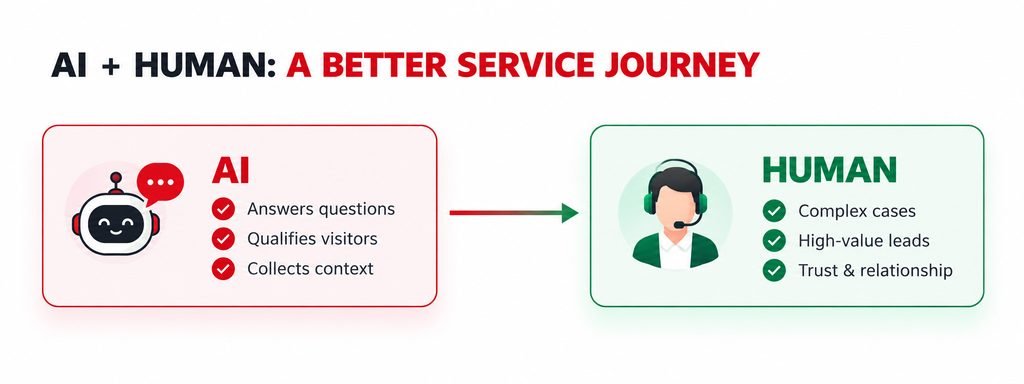
Figure 3. AI can handle routine interactions while humans handle complex or high-value conversations.
7. What Should a Business Automate?
A practical workflow for many service-based and B2B websites looks like this. The important part is not the chat bubble itself; it is the connected process that follows the conversation.
8. Is AI Customer Service Becoming the New Normal?
Salesforce’s 2025 State of Service research, based on 6,500 service professionals worldwide, found that service teams estimated AI handled 30% of cases in 2025 and expected that figure to reach 50% by 2027.
This is a forecast from survey respondents, not a universal measurement of every business. Still, it illustrates how quickly AI is becoming part of mainstream service operations.
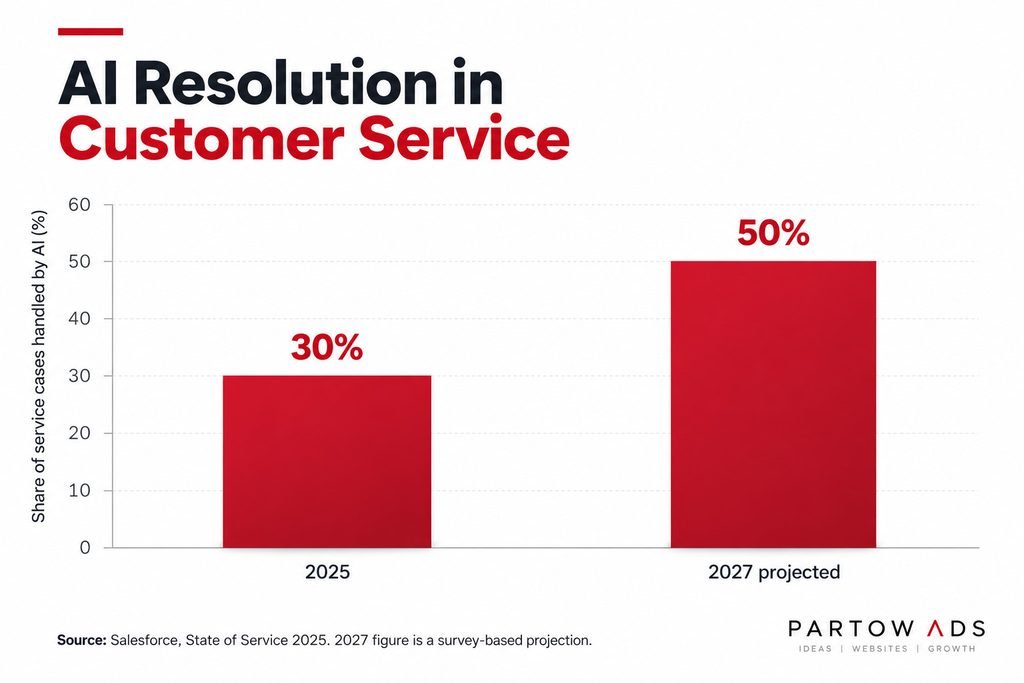
Figure 4. Salesforce survey estimate: 30% of service cases handled by AI in 2025; 50% expected in 2027.
9. The Real Question Isn’t “Do I Need a Chatbot?”
The better question is: “What should happen after someone lands on my website?”
For many businesses, the answer is not simply “install a chatbot.” It is to build a connected system where the website, chatbot, CRM and follow-up process work together.
At Partow Ads, we look at the bigger picture: website, AI, automation and CRM working as one system. If your website is already getting enquiries, the next question is simple: what happens to those leads after the first message?
Talk to our team to explore what could be automated.
Key Data Points
| Finding | Figure | Source |
| Customers who say human access is essential when companies use GenAI | 87% | Gartner, Aug 2026 |
| GenAI users who have used it to complete a task | 58% | Gartner, Aug 2026 |
| B2B GenAI users who have used it to complete a task | 74% | Gartner, Aug 2026 |
| Service cases estimated to be handled by AI in 2025 | 30% | Salesforce, 2025 |
| Service cases expected to be handled by AI in 2027 | 50% | Salesforce, 2025 |
| Customers willing to try a chatbot again after a negative experience | 27% | Gartner, Sep 2026 |
Sources & References
Gartner : Customers are 3x more likely to use third-party GenAI than company-provided chatbots (July 8, 2026). – https://www.gartner.com/en/newsroom/press-releases/2026-07-08-gartner-survey-finds-customers-are-three-times-more-likely-to-use-third-party-genai-than-company-provided-chatbots-for-customer-service
Gartner : 87% say human access is essential with GenAI customer service (Aug. 4, 2026). – https://www.gartner.com/en/newsroom/press-releases/2026-08-04-gartner-survey-finds-87-percent-of-customers-say-companies-using-genai-for-customer-service-must-provide-access-to-a-human-agent0
Gartner : Only 27% would try a chatbot again after a negative experience (Sep. 2, 2026). – https://www.gartner.com/en/newsroom/press-releases/2026-09-02-gartner-finds-only-27-percent-of-customers-would-try-a-chatbot-again-after-a-negative-experience
Salesforce : Seventh State of Service report: 30% in 2025, 50% expected by 2027. – https://www.salesforce.com/blog/state-of-service/
FAQ
Does adding a chatbot automatically generate more leads?
Not on its own. It can generate or capture more leads when it is connected to a clear qualification, CRM and follow-up process.
Can a chatbot replace a sales team?
A chatbot can handle repetitive questions and qualify enquiries, but human teams remain important for complex, high-value or relationship-driven conversations.
Is a chatbot worth it for a low-traffic website?
Usually, improving visibility, content and traffic should come first. A chatbot becomes more useful when there is enough visitor activity to generate meaningful conversations.
Can an AI chatbot connect to a CRM?
Yes. Depending on the tools used, chatbot data can be sent to a CRM, trigger notifications, assign leads and start automated follow-up workflows.
Ready to Turn Website Visitors Into Leads?
Build a smarter website with AI chat, lead qualification and automated follow-ups.
Categorise
Tags
#advertising (11) #advertising-agency (6) #advertising-strategies (4) #brand-story (1) Branding (7) digital marketing (7) Marketing (8) partow ads (4) social media campaign (1) Strategies (2)
Recent Posts
- Meta One Malaysia: Pricing, Plus Plans & Business Features

- ChatGPT Ads in Malaysia: Cost, Availability & How It Works?

- Does AI-Generated Content Get Less Reach on Social Media in 2026?
- Trend or Trap? A Brand’s Guide to Choosing Social Media Trends Without Losing Its Identity

- Brand Identity & Brand System: Building a Strong, Consistent Brand



Leave a Reply