

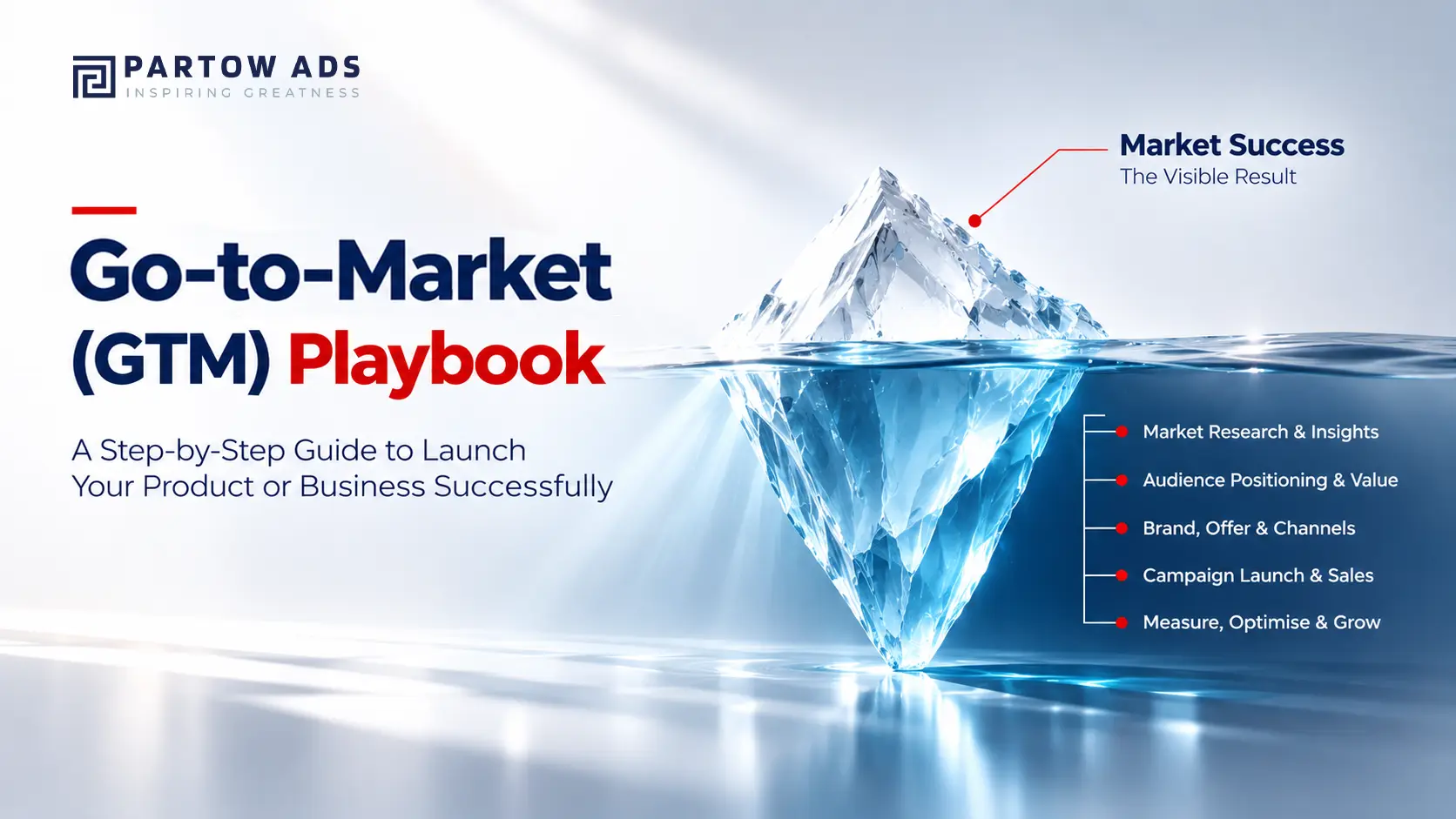
How to Launch a Product or Business Successfully (2026 Guide)
PARTOW ADS | MALAYSIA BUSINESS GUIDE
A practical launch-planning workspace in Kuala Lumpur.
Launching a new business or introducing a product in Malaysia takes more than creating an Instagram page, building a website or running a few advertisements. You need to know who your customers are, what makes your offer different, how much they are willing to pay, and where they are most likely to discover and purchase from your business.
This is where a Go-to-Market (GTM) strategy becomes important.
Whether you are starting a café in Kuala Lumpur, launching a beauty brand, opening an online store, introducing a professional service or expanding an established company into a new market, a clear go-to-market strategy can help you reduce unnecessary spending, reach relevant customers and build a stronger market position.
In this guide, Partow Ads explains how to create a go-to-market strategy in Malaysia, including market research, customer targeting, pricing, branding, marketing channels, launch budgets and a practical 90-day action plan.
In This Guide
- Quick Answer: What Is a Go-to-Market Strategy?
- 1. Why Does Your Business Need a Go-to-Market Strategy?
- 2. Understand the Malaysian Market Before Launching
- 3. Define Your Target Audience and Ideal Customer
- 4. Create a Unique Value Proposition
- 5. Decide Your Pricing Strategy and Launch Budget
- 6. Choose the Right Marketing Channels in Malaysia
- 7. Build Your Digital Presence Before Launching
- 8. Create a Product Launch Marketing Plan
- 9. Your First 90 Days: A Practical Go-to-Market Timeline
- 10. How to Measure Your Go-to-Market Strategy
- 11. Common Go-to-Market Mistakes to Avoid
- Frequently Asked Questions
- Final Thoughts
Quick Answer: What Is a Go-to-Market Strategy?
A Go-to-Market (GTM) strategy is a structured plan explaining how a business will introduce a product or service to its target customers and generate sales.
It connects several business activities:
- Market research and competitor analysis
- Target audience identification
- Product positioning and unique value proposition
- Pricing and distribution
- Branding and digital presence
- Marketing and advertising
- Sales and customer acquisition
- Performance measurement
The objective is simple: make sure the right product reaches the right customers through the right channels, with a clear reason to buy.
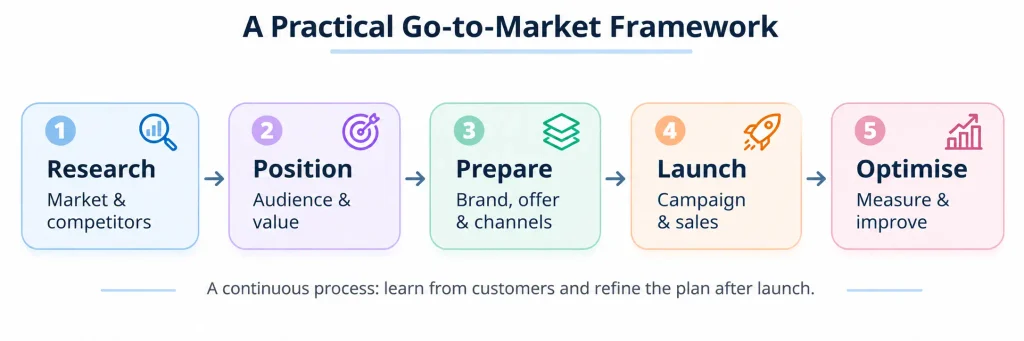
Figure 1. A practical go-to-market framework.
1. Why Does Your Business Need a Go-to-Market Strategy?
Many businesses begin marketing before they understand their market. They invest in logo design, packaging, social media content, websites and advertising without first answering an important question: Is there a clear market opportunity for what we are selling?
Imagine launching a premium beauty product in Malaysia. You invest in professional photography, attractive packaging and social media advertising. However, after several weeks, your campaign generates views but very few purchases.
The problem may not be the product itself. Perhaps the target audience is too broad, the price does not match customer expectations, the product benefits are unclear, or customers do not have enough information to trust the brand.
A GTM strategy helps identify these problems before they become expensive mistakes.
Five benefits of a go-to-market strategy
- Understand market demand. Research customer needs, competitor offerings and purchasing behaviour before investing in a launch.
- Identify the right customers. Focus on people who have a genuine need for your product or service rather than advertising to everyone.
- Build a clear market position. Communicate why customers should choose your business instead of another available option.
- Allocate your budget more effectively. Select marketing channels based on customer behaviour, business objectives and available resources.
- Measure actual business results. Track enquiries, conversions, customer acquisition costs and revenue instead of focusing only on impressions and followers.
A GTM strategy is useful for startups, SMEs, established companies, eCommerce businesses, product launches and businesses entering new geographical markets.
2. Understand the Malaysian Market Before Launching
Before deciding how to promote your business, understand the market you want to enter. Malaysia has opportunities across food and beverage, beauty, retail, education, technology, professional services and eCommerce. However, customer expectations and purchasing behaviour vary considerably between industries and customer segments.
What do the latest digital economy figures tell us?
According to the Department of Statistics Malaysia (DOSM), its Statistics on ICT Usage and E-Commerce by Establishments 2025 publication, released on 30 June 2026 and covering reference year 2024, reported the following findings:
| Digital indicator | Malaysian establishments |
| Internet access | 95.3% |
| Social media usage | 80.3% |
| Web presence | 74.4% |
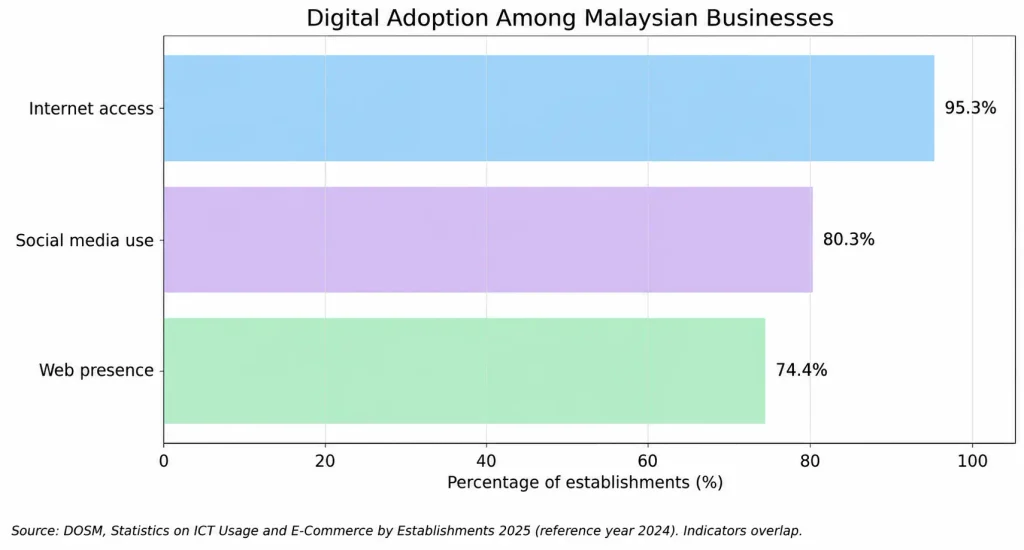
Figure 2. Digital adoption indicators among Malaysian establishments, reference year 2024. These indicators overlap and are not market shares.
These are separate indicators, not shares of a single market or mutually exclusive channels. DOSM also reported that eCommerce income grew by 8.8% to approximately RM1.29 trillion in 2024, compared with approximately RM1.18 trillion in 2023.
More recently, DOSM’s Information and Communication Technology Satellite Account 2025, released on 15 October 2026, reported that the ICT industry and e-commerce together contributed RM476.8 billion in gross value added in 2025, equivalent to 23.5% of Malaysia’s GDP. This is a combined ICT-economy measure, not eCommerce income alone.
Official sources: DOSM ICT and E-Commerce Establishments 2025 (PDF) | DOSM ICT Satellite Account 2025
What this means for a new business
Having an online presence is no longer enough on its own. Your business needs to make it easy for customers to discover your products through search engines and social platforms, compare your offer, understand pricing and benefits, check reviews, contact you or complete a purchase.
A professional website, social media presence, online marketplaces and direct communication channels can work together to support the customer journey.
Understand Malaysia’s different customer segments
Language. English, Bahasa Malaysia and Chinese-language content can help reach different customer groups. Choose languages according to your actual audience rather than translating everything automatically.
Location. Customer behaviour in Kuala Lumpur and Selangor may differ from Penang, Johor Bahru, Sabah or Sarawak. Delivery availability, purchasing power and local competition can influence your strategy.
Culture and preferences. Food, beauty, lifestyle and consumer brands should consider relevant cultural preferences, occasions and purchasing expectations.
Halal considerations. For businesses in relevant sectors, halal requirements may be important to product development, operations and customer trust. Certification requirements can involve ingredients, processing, storage, handling and other matters. Check the official guidance before making certification claims.
Official guidance: Malaysia Government – Obtaining Halal Certification
Research your competitors
| Research area | What to investigate |
| Products and services | What exactly are they selling? |
| Pricing | How much do they charge? |
| Positioning | Are they premium, affordable, specialist or mass-market? |
| Branding | How do they present themselves? |
| Website | Is the website professional and easy to use? |
| Social media | What type of content do they publish? |
| Customer reviews | What do customers appreciate or complain about? |
| Sales channels | Do they sell through websites, marketplaces or physical stores? |
Use Google Search, Google Maps, customer reviews, social media and competitor websites to collect information. The purpose is not to copy competitors. It is to discover what customers already expect and identify opportunities to offer something different.
3. Define Your Target Audience and Ideal Customer
One of the most common marketing mistakes is trying to reach everyone. A broad audience makes it difficult to create relevant messages, choose suitable advertising platforms and convert potential customers.
Instead, define your ideal customer using four areas:
| Area | Questions |
| Demographics | Age, location, occupation and income |
| Psychographics | Lifestyle, interests and preferences |
| Behaviour | Shopping habits, purchasing frequency and preferred platforms |
| Pain points | What problems or needs influence buying decisions? |
Example: Launching a new beauty product in Malaysia
Consider a hypothetical company introducing a premium skincare product. Its initial target audience might include urban consumers aged 22–40, customers interested in skincare and beauty, people who value product quality and ingredients, and customers who discover products through Instagram, TikTok and online reviews.
This customer profile helps determine the product’s positioning, pricing, brand identity, content strategy and advertising channels.
Practical tip: Create two or three customer personas instead of relying on one broad profile. Different customer groups may respond to different messages, prices and promotional offers.
4. Create a Unique Value Proposition (UVP)
Your Unique Value Proposition explains why customers should choose your product or service instead of a competitor’s. It should answer three questions: What do you offer? Who is it designed for? Why is it different or valuable?
Generic message: “We provide bookkeeping services.”
More specific message: “We provide monthly bookkeeping and tax-ready reports for Malaysian online sellers who want clear numbers without hiring a full-time accountant.”
The second statement communicates the target audience and intended business benefit more clearly.
How to develop your brand positioning
- What makes my product or service different?
- What customer problem does it solve?
- Which benefits matter most to my audience?
- What do competitors promise?
- What should customers remember about my brand?
Your positioning should remain consistent across your logo, website, packaging, social media, advertisements and customer communication. A strong visual identity also helps customers recognise your business across different channels.
Explore more: Brand Identity & Brand System: Building a Strong, Consistent Brand
5. Decide Your Pricing Strategy and Launch Budget
Pricing is one of the most important decisions in your go-to-market strategy. Your price influences how customers perceive your product, whether they consider it affordable and how much profit your business can generate.
Before deciding on a price, consider production or service delivery costs, packaging and distribution, competitor pricing, target customer purchasing power, desired profit margin, marketing and customer acquisition costs, taxes and operational expenses.
Five common pricing strategies
| Strategy | How it works | Suitable for |
| Cost-based | Adds a profit margin to total costs | Standard products and services |
| Competitive | Uses competitor prices as a reference | Competitive markets |
| Value-based | Reflects perceived customer value | Premium and specialist offers |
| Penetration | Uses an attractive introductory price | New market entry |
| Premium | Positions the offer at a higher price | Luxury and differentiated brands |
There is no universal pricing formula. Your approach should reflect your costs, customer expectations, market position and business objectives.
How much should you budget for a launch in Malaysia?
There is no fixed amount required to launch a business. A local service provider, an online retailer and a physical product brand will have very different requirements.
To understand how a marketing budget could be allocated, consider this illustrative example.
| Marketing activity | Allocation | Amount |
| Branding and creative assets | 15% | RM750 |
| Content and photography | 20% | RM1,000 |
| Paid advertising | 35% | RM1,750 |
| Campaign management and optimisation | 15% | RM750 |
| Testing and contingency | 15% | RM750 |
| TOTAL | 100% | RM5,000 |
This is an illustrative allocation, not an industry benchmark or a Partow Ads quotation. It assumes that the business already has a functional website or sales platform. Website development, inventory, product manufacturing, logistics and other operational costs are excluded.
If your business still needs a website, calculate that investment separately. Website costs vary according to scope, functionality, design requirements and integrations. Partow Ads explains the factors and indicative ranges in its website pricing guide.
Read: How Much Does Website Design Cost in Malaysia in 2026?
Need help planning your launch budget?
Before investing in multiple advertising platforms, review your business goals, website requirements, brand positioning and customer acquisition strategy. Partow Ads can help assess your digital presence and identify the marketing activities that deserve priority.
Discuss your plans with Partow Ads to explore the right digital and creative support for your launch.
6. Choose the Right Marketing Channels in Malaysia
Your marketing channels should be selected according to where your target customers discover, evaluate and purchase products or services. You do not need to advertise everywhere. You need to be visible in the places that matter to your customers.
Google Search and SEO
Google Search is useful when potential customers are actively looking for a product or service. Examples include website design company in Kuala Lumpur, best café in KL, digital marketing services for SMEs and event photographer near me. SEO helps your website become more discoverable for relevant searches over time. For local businesses, a well-maintained Google Business Profile can also help customers find business information, locations, opening hours and reviews.
Instagram and Facebook
Instagram and Facebook can help businesses build awareness, showcase products, share customer experiences and generate enquiries. They can be useful for restaurants, cafés, beauty and lifestyle brands, retail businesses and event businesses. Reels, product demonstrations, testimonials and behind-the-scenes videos can communicate your brand’s value.
TikTok and TikTok Shop
TikTok provides opportunities to reach audiences through short-form video, product demonstrations, creator partnerships and social commerce. TikTok Shop can provide an additional sales channel for eligible product businesses. However, a high number of views does not automatically translate into sales. Product presentation, pricing, reviews, fulfilment and customer experience still matter.
Shopee and Lazada
For product-based businesses, marketplaces such as Shopee and Lazada offer additional opportunities to reach customers who are already browsing for products. Before choosing a marketplace, consider platform fees, product competition, delivery and fulfilment requirements, promotional costs, customer service expectations and your ability to maintain competitive pricing. Marketplaces can complement your own website rather than necessarily replacing it.
WhatsApp Business
WhatsApp is relevant for businesses that depend on enquiries, quotations, appointments and direct customer communication. It can support product enquiries, appointment bookings, service quotations, customer follow-ups, order confirmations and customer support. Use consent-based, relevant messaging and make it easy for customers to contact your business.
Influencer and creator marketing
Influencer marketing can help new brands introduce products to relevant audiences through creators. Consider audience relevance, location, engagement quality, content style, brand alignment and campaign objectives. Do not select creators based on follower count alone.
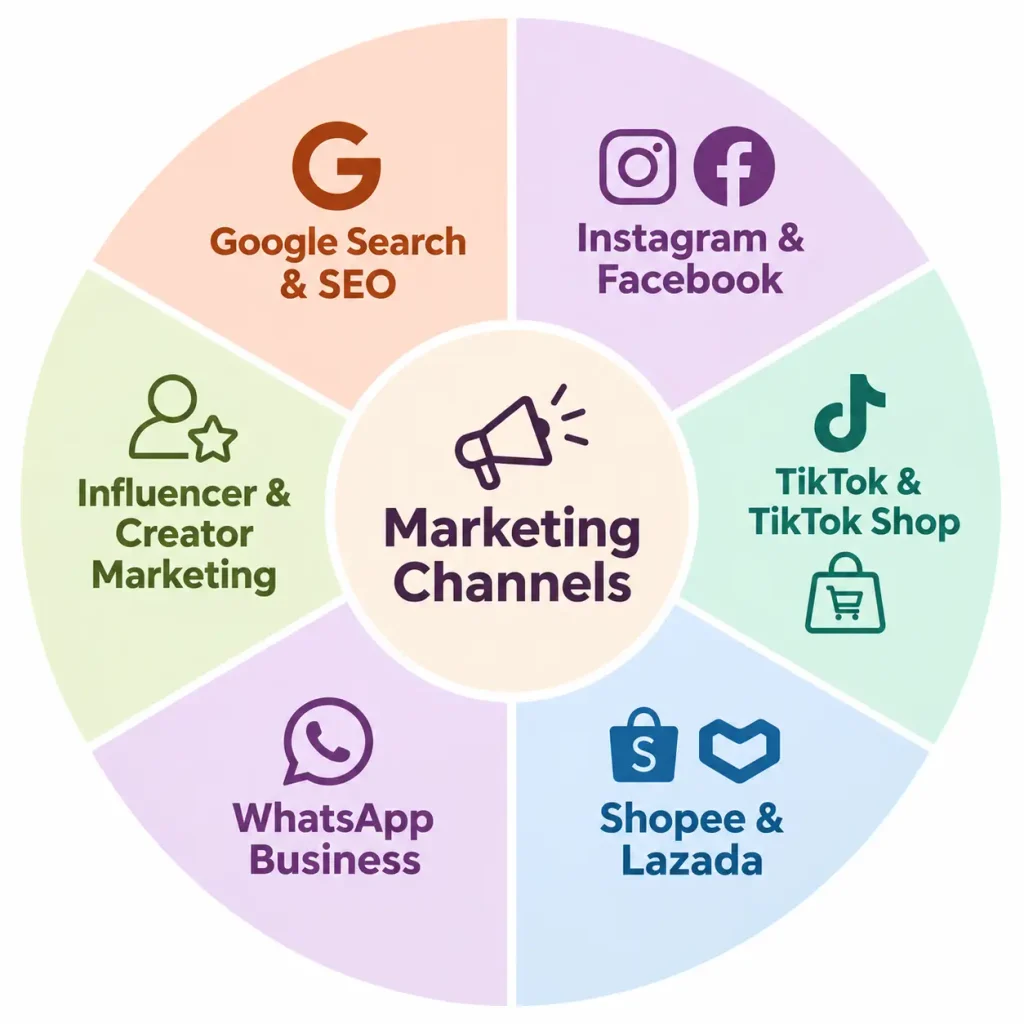
Which marketing channel should you choose?
| Business type | Channels to consider | Main objective |
| Restaurant or café | Google Business Profile, Instagram, TikTok | Visits and reservations |
| Professional services | Website, SEO, Google Ads, LinkedIn | Qualified enquiries |
| Beauty brand | Instagram, TikTok, marketplaces | Product discovery and sales |
| Online retailer | Website, Shopee, Lazada, TikTok Shop | Online purchases |
| B2B company | Website, Google Search, LinkedIn | Business leads |
| Local service provider | Google Search, Maps, WhatsApp | Calls and bookings |
These are starting recommendations, not guaranteed formulas. Test the channels that fit your customers and measure their actual contribution to business results.
Related guide: Digital Marketing for Small Business in Malaysia: 2026 Guide (With RM Budgets)
For paid social campaigns: Meta Ads Objectives: How to Choose the Right Campaign Objective
7. Build Your Digital Presence Before Launching
Before spending heavily on advertising, make sure your business is ready to receive customers. Your digital presence should make it easy for people to understand your offer, trust your brand and take the next step.
Website or landing page
Your website should clearly communicate what your business offers, who your products or services are designed for, why customers should choose you, relevant pricing or quotation information, customer testimonials and portfolio examples, contact information and clear calls to action.
If your business sells products online, you may also need product categories, shopping cart functionality, payment gateways, shipping options and order management. A landing page can be useful for a specific advertising campaign or product launch.
Branding and visual identity
Your visual identity should be consistent across logo and typography, brand colours, photography, packaging, social media graphics, website design and advertising materials. Consistency makes your business easier to recognise and helps create a professional customer experience.
Prepare your social media content
| Content type | Purpose |
| Brand introduction | Explain your business story |
| Product showcase | Introduce your offer |
| Educational content | Explain customer benefits |
| Behind-the-scenes | Build authenticity |
| Testimonials | Develop trust |
| Promotional content | Encourage purchases |
| FAQs | Answer customer questions |
Do not wait until launch day to start creating content. Prepare a content plan in advance. For businesses targeting multiple language groups, prepare content in the languages that are relevant to those customers.
Related reading: Why Your Website Gets Traffic but No Leads: 10 Conversion Problems to Fix
8. Create a Product Launch Marketing Plan
Once your audience, positioning, pricing and digital presence are ready, prepare your launch campaign. A structured launch plan can be divided into three stages.
Stage 1: Pre-Launch
Objective: Build awareness and generate interest.
- Announce the upcoming product or service.
- Introduce your brand story.
- Publish teaser content.
- Prepare product photography and videos.
- Create a landing page.
- Build an enquiry or email list.
- Contact relevant creators and business partners.
- Set up analytics and conversion tracking.
Stage 2: Official Launch
Objective: Generate enquiries, trials or sales.
- Publish the official launch announcement.
- Start relevant advertising campaigns.
- Share product demonstrations.
- Introduce a launch offer where commercially appropriate.
- Encourage customer reviews and feedback.
- Publish educational and promotional content.
- Monitor enquiries and campaign performance.
Stage 3: Post-Launch
Objective: Improve conversions and build customer relationships.
- Analyse campaign performance.
- Identify the strongest customer segments.
- Review customer feedback.
- Improve advertising creatives.
- Follow up with qualified leads.
- Develop retargeting campaigns where appropriate.
- Encourage repeat purchases and referrals.
A product launch should not end after the announcement. The post-launch period is where you learn what works and improve your strategy.
9. Your First 90 Days: A Practical Go-to-Market Timeline
A 90-day plan can help a business manage its launch activities without trying to complete everything at once.
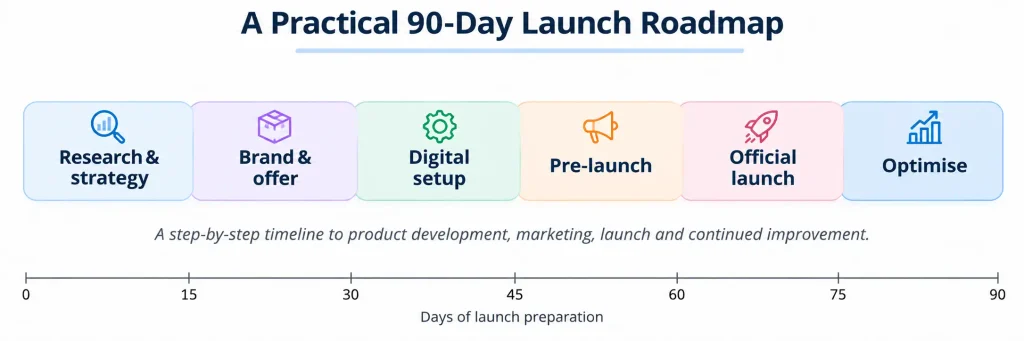
Figure 3. An adaptable 90-day launch roadmap.
| Timeline | Main focus | Key activities |
| Days 1–15 | Research and strategy | Market research, competitors, audience and positioning |
| Days 16–30 | Brand preparation | Branding, pricing, website planning and marketing strategy |
| Days 31–45 | Digital setup | Website, social media, content and tracking |
| Days 46–60 | Pre-launch | Teaser campaigns, partnerships and audience building |
| Days 61–75 | Official launch | Advertising, promotions and sales activities |
| Days 76–90 | Optimisation | Performance analysis, customer feedback and improvements |
This timeline is a planning framework, not a universal rule. Businesses involving product manufacturing, inventory, regulatory approvals, halal certification, logistics or physical premises may need a longer preparation period.
10. How to Measure Your Go-to-Market Strategy
A campaign can generate thousands of impressions without producing meaningful business results. That is why you need to measure performance using KPIs that reflect your business objectives.
| KPI | What it measures |
| Website traffic | Number of visitors to your website |
| Conversion rate | Percentage of visitors completing a desired action |
| Cost per lead (CPL) | Cost of generating a lead |
| Customer acquisition cost (CAC) | Cost of acquiring a new customer |
| Return on ad spend (ROAS) | Attributed revenue relative to advertising expenditure |
| Average order value (AOV) | Average revenue per order |
| Customer lifetime value (CLV) | Estimated value generated by a customer over time |
Example: Measuring a launch campaign
Consider an illustrative campaign with advertising expenditure of RM1,500, 100 enquiries, 20 confirmed customers and RM6,000 in attributed revenue.
| Metric | Calculation | Result |
| Cost per lead | RM1,500 ÷ 100 enquiries | RM15 |
| Advertising cost per customer | RM1,500 ÷ 20 customers | RM75 |
| Return on ad spend | RM6,000 ÷ RM1,500 | 4.0x |
This means the campaign generated RM4 in attributed revenue for every RM1 spent on advertising. However, ROAS is not the same as profit. Product costs, operational expenses, fulfilment, taxes and other business costs must also be considered.
Tracking these metrics helps you understand which activities deserve more investment.
11. Common Go-to-Market Mistakes to Avoid
- Launching without market research. Assuming there is demand without validating customer needs can result in wasted resources.
- Targeting everyone. A broad audience makes it difficult to create relevant messages and effective campaigns.
- Competing only on price. Discounts may attract initial attention but do not automatically create customer loyalty.
- Ignoring branding. An inconsistent identity can make a new business appear less credible.
- Depending entirely on social media. Social platforms are useful, but businesses should consider building their own website and customer communication channels.
- Spending on advertising without tracking conversions. Without proper measurement, it becomes difficult to understand whether campaigns are generating valuable results.
- Ignoring local customer expectations. Language, culture, delivery options, payment methods and relevant certification requirements can influence purchasing decisions in Malaysia.
- Stopping after launch. Customer feedback, campaign analysis and continuous improvement are essential for long-term growth.
Frequently Asked Questions
What does GTM stand for in business?
GTM stands for Go-to-Market. It refers to the strategy a company uses to introduce and sell a product or service to its target customers.
What are the five main elements of a go-to-market strategy?
Five important elements are the target audience, value proposition, pricing, marketing and distribution channels, and sales strategy. A complete plan should also include research, budget, timelines, and performance measurement.
How do you create a go-to-market strategy?
Start by researching your market and competitors. Identify your target customers, define your positioning, establish pricing, select marketing channels, prepare your digital presence and create a launch plan. Finally, track results and optimise your activities.
How much does a product launch cost in Malaysia?
There is no standard launch cost. Expenses depend on the product, industry, branding requirements, website development, inventory, advertising, and operational needs.
What is the difference between a go-to-market strategy and a marketing strategy?
A go-to-market strategy covers the complete process of bringing an offer to customers, including market selection, positioning, pricing, sales, and distribution. A marketing strategy focuses more specifically on reaching and engaging the target audience through marketing activities.
Is a go-to-market strategy only for startups?
No. Established businesses also use GTM strategies when launching new products, introducing services, entering new markets, targeting different customer segments, or repositioning their brands.
Which marketing channels are best for launching a business in Malaysia?
The best channels depend on your industry and target audience. Google Search and SEO can help customers discover services; Instagram and TikTok can support product discovery; marketplaces can support e-commerce sales, and WhatsApp can help manage direct enquiries.
How long does it take to create a go-to-market strategy?
A straightforward small-business launch plan may take a few weeks to prepare. More complex products, physical operations and market-entry projects can require several months.
Final Thoughts: Turn Your Business Idea into a Market-Ready Brand
Launching a business successfully requires more than visibility. It requires a clear understanding of your market, a strong value proposition, appropriate pricing, consistent branding and a marketing strategy that connects with your customers.
A well-planned go-to-market strategy brings these elements together.
Whether you are starting a new business, introducing a product or expanding an existing brand in Malaysia, the right combination of strategy, creativity and digital marketing can help you build a stronger market presence.
Need Help Preparing Your Business for Launch?
At Partow Ads, we help businesses in Kuala Lumpur, across Malaysia and internationally strengthen their digital presence through:
- Website Design & Development
- Branding & Creative Solutions
- Social Media Management
- Digital Marketing & Advertising
- Photography & Video Production
From building a professional website and creating a consistent brand identity to planning digital campaigns and producing marketing content, our team helps businesses prepare for their next stage of growth.
Planning to launch a new product or grow your business?
Contact Partow Ads to discuss your project and explore the right digital and creative solutions for your business.
Sources and Further Reading
- Department of Statistics Malaysia – Statistics on Usage of ICT and E-Commerce by Establishments 2025 (PDF)
- Department of Statistics Malaysia – Information and Communication Technology Satellite Account 2025
- Malaysia Government – Obtaining Halal Certification
- Google Search Central – Creating Helpful, Reliable, People-First Content
- Google Search Central – AI Features and Your Website
Categorise
Tags
#advertising (11) #advertising-agency (6) #advertising-strategies (4) #brand-story (1) Branding (7) Marketing (8) narrative-driven branding (1) partow ads (4) social media campaign (1) Strategies (2)
Recent Posts
- Go-to-Market (GTM) Strategy in Malaysia
- Digital Marketing for Small Business in Malaysia: 2026 Guide (With RM Budgets)
- Exhibition Checklist Malaysia: Booth, Printing, Gifts & Costs (2026)

- Why Your Website Gets Traffic but No Leads: 10 Conversion Problems to Fix

- Meta One Malaysia: Pricing, Plus Plans & Business Features



Leave a Reply