


By the Partow Ads Branding Team | Reviewed by Partow Ads Creative Direction | Published & last updated: 25 September 2026
What Is Brand Identity?
Brand Identity is the collection of visual and verbal elements that define how a brand presents itself to its audience.
It can include:
- Logo and logo variations
- Brand colours
- Typography
- Photography style
- Graphic elements
- Icons and illustrations
- Packaging
- Tone of voice
- Brand messaging
- Visual style
Together, these elements create a recognizable identity. However, having these elements alone does not necessarily mean a brand has a complete system.
What Is a Brand System?
A Brand System takes the identity one step further. It establishes the rules, relationships and structures that determine how the brand should be used consistently across different platforms and situations.
Think of it this way:
- Brand Identity = What the brand looks and sounds like.
- Brand System = How that identity works consistently everywhere.
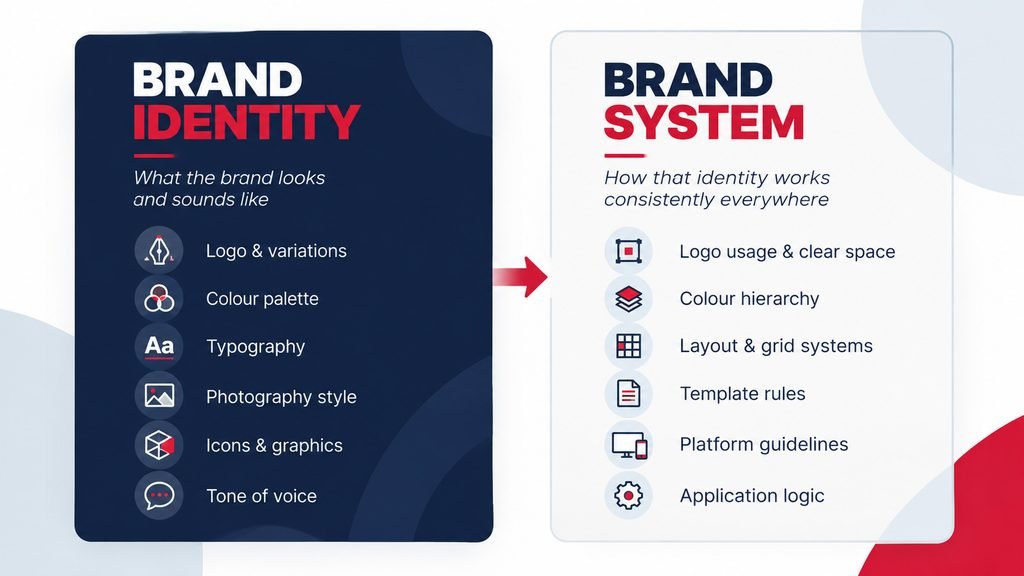
Figure 1 — Brand Identity vs Brand System
A brand system can define:
- Logo usage and clear space
- Colour hierarchy
- Typography hierarchy
- Layout and grid systems
- Image direction
- Illustration and icon styles
- Social media templates
- Advertising layouts
- Website components
- Presentation templates
- Packaging rules
- Brand voice and messaging principles
Why Brand Consistency Matters
Customers may encounter a business through its website, social media, advertising, packaging or physical location. When those touchpoints feel disconnected, it can become harder to build a recognizable brand.
Consistency does not mean making every design identical. It means creating a recognizable visual and verbal language that can adapt to different contexts.
A social media post should not necessarily look exactly like a website banner. Both should, however, clearly feel like they belong to the same brand.
| Consistent brand presentation across all channels has been linked to revenue growth of roughly 10–33%, with an average of about 68% of companies reporting a 10–20% uplift. Source: Marq (formerly Lucidpress), State of Brand Consistency Report, figures compiled from multiple editions of the annual study. |
Brand Identity vs Brand System
Brand Identity defines the visual and verbal elements of a brand. A Brand System defines how those elements work together and are applied consistently.
| Brand Identity | Brand System |
| Logo, colours, fonts and imagery | Rules, templates, hierarchy and applications |
| Establishes the brand look and voice | Creates consistency across touchpoints |
| Focuses on identity elements | Focuses on how the elements work together |
The two work together rather than replacing one another. A strong brand identity gives you the ingredients. A strong brand system tells you how to use those ingredients.
What Does a Brand System Include?
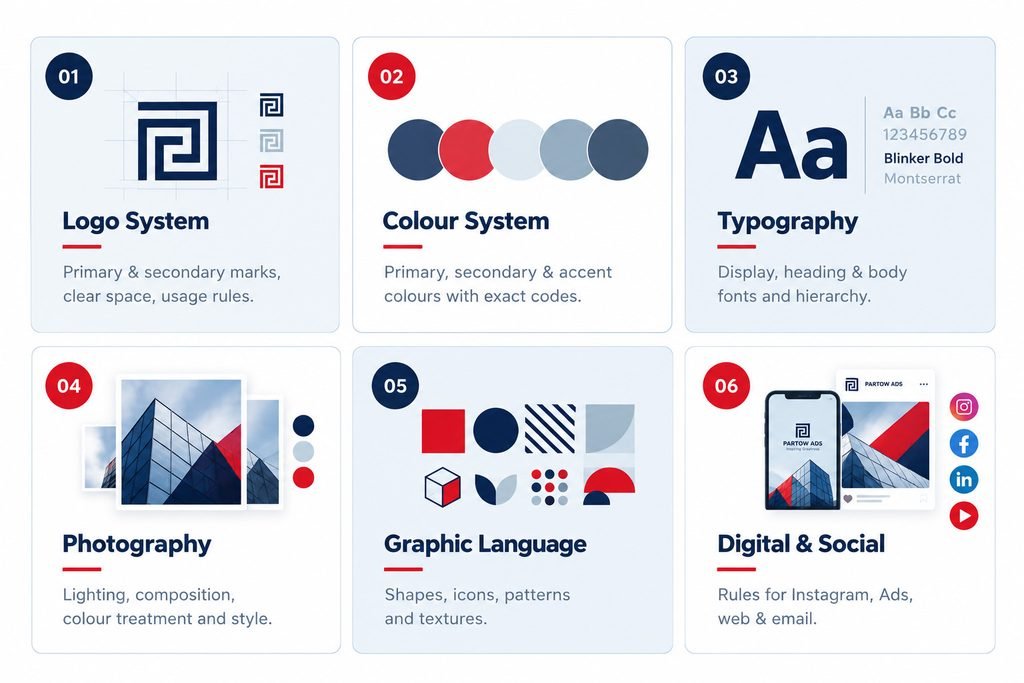
1. Logo System
A professional brand system can include primary and secondary logos, symbols, light and dark versions, minimum size, clear space and incorrect usage examples.
2. Colour System
A colour system can define primary, secondary and accent colours, together with HEX, RGB, CMYK and other specifications where required.
3. Typography System
This can establish display, heading and body fonts, weights, sizes, spacing and hierarchy for digital and print applications.
4. Photography and Image Direction
Guidelines can define lighting, composition, camera angles, colour treatment, subject positioning, background style and editing.
5. Graphic Language
Shapes, lines, patterns, illustrations, icons, textures and other graphic devices can create visual recognition beyond the logo.
6. Digital and Social Media System
A modern brand system can establish rules for Instagram posts, Reels, Stories, Meta Ads, website banners, email marketing, LinkedIn, YouTube thumbnails and presentations.
Why Businesses Need a Brand System
As businesses grow, branding becomes more complex. You may have one brand, multiple platforms, multiple campaigns and multiple people creating marketing materials.
A brand system helps businesses:
- Build recognition
- Improve creative efficiency
- Maintain quality across teams
- Scale marketing without reinventing the brand
- Create a more consistent customer experience
Brand System Is Not Just a Brand Guidelines PDF
A traditional brand guideline may tell you, “Use this colour.”
A stronger brand system explains how that colour should be used — for example, which colour should dominate, which should support it, and which should be reserved for accents or calls to action.
The difference is application logic.
A practical brand system should help teams answer questions such as:
- Which font should I use here?
- How much space should I leave around the logo?
- Which colours should dominate this layout?
- How should photography be treated?
- How should an Instagram campaign look?
- How should the brand adapt to a new platform?
Brand System and Brand Strategy
A visual system should connect to the broader brand strategy.
Before deciding how a brand should look, businesses need to understand:
- Who is the target audience?
- What does the brand stand for?
- What makes it different?
- What is its positioning?
- What personality should it communicate?
- What customer perception should it build?
This is why branding should not start with “What colour should our logo be?” It should start with: “What do we want people to think and feel when they experience our brand?”
Once that is clear, the visual identity and brand system can be designed to support the strategy.
Real-World Examples of a Strong Brand System
Two publicly documented examples show how brand systems can create consistency across different types of communication, one focused on visual identity and the other on brand voice and language.
NASA Graphics Standards Manual
Designed by Richard Danne and Bruce Blackburn in 1975, the NASA graphics system became one of the most influential examples of systematic identity design. The accompanying NASA Graphics Standards Manual was issued in January 1976, establishing detailed rules for how NASA’s visual identity should be applied across publications, signage, vehicle markings, uniforms, and other communications. NASA has made the historical manual available through its official website.
Mailchimp Content Style Guide
A more contemporary example shows that consistency is not limited to visual design. Mailchimp’s public Content Style Guide defines its brand voice, explains how tone should change depending on context, and provides writing and communication standards used across teams and channels.
Together, these examples illustrate an important principle: a strong brand system is not simply a collection of logos, colors, or guidelines. It creates a framework that helps a brand communicate consistently across different touchpoints.
When Should You Invest in a Brand System?
A brand system becomes particularly valuable when:
- Your business is expanding
- You are launching multiple products or services
- Several people create your marketing materials
- Your social media looks inconsistent
- You are running paid advertising
- You are redesigning your website
- You are entering new markets
- You are working with external designers or agencies
- You are preparing for a rebrand
If your brand already has a strong identity but your marketing materials still look disconnected, you may not need to start from zero. You may simply need to build a stronger system around what you already have.
How Partow Ads Approaches Branding
At Partow Ads, branding is approached as more than creating a logo.
Our approach connects strategy, identity, creative direction and marketing execution.
Depending on the project, a branding system can include:
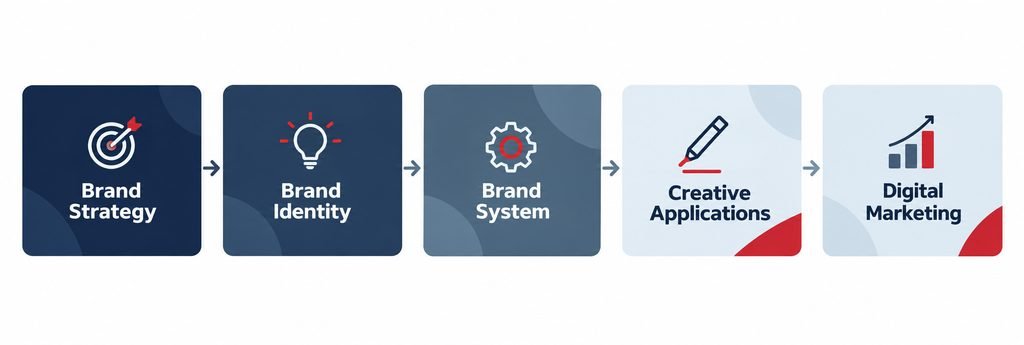
This helps the brand remain consistent from its core identity through to everyday marketing communication.
From logo and visual identity development to social media, advertising, websites and campaign creative, the goal is to create a brand that can actually work in the real world.
Explore Partow Ads’ Branding & Brand Identity Services to see how we can help develop or strengthen your brand.
Build a Brand That Can Grow With Your Business
A logo can introduce your business.
A brand identity can make it recognizable.
A well-designed brand system helps that identity work consistently as your business grows.
In a world where customers may discover your business through an Instagram Reel, Google search, website, advertisement or physical location, consistency matters more than ever.
The goal is not to make every piece of content look the same. The goal is to make every piece of communication feel like it comes from the same brand.
Frequently Asked Questions
Is Brand Identity the same as Brand System?
Not exactly. Brand Identity defines the visual and verbal elements of a brand, while a Brand System defines how those elements work together and are applied consistently across different touchpoints.
Do small businesses need a Brand System?
Yes, especially if they plan to grow, advertise across multiple platforms or work with different designers and marketing teams.
What is included in a Brand System?
It can include logo rules, colours, typography, photography, graphic elements, layouts, templates, social media guidelines, advertising principles and other rules for consistent brand application.
How is Brand System different from Brand Guidelines?
Brand Guidelines usually document the rules of the brand. A Brand System goes further by creating a structured framework for how the brand’s elements interact and adapt across different applications.
Can Partow Ads create a complete Brand Identity and Brand System?
Partow Ads can develop branding from strategy and visual identity through to practical creative applications for digital marketing, social media, advertising and other brand touchpoints.
How much does a Brand System cost in Malaysia?
Cost depends on scope, a starter identity system differs from a full multi-platform brand system with templates and guidelines. Partow Ads scopes each project after understanding the business and its platforms.
Ready to Build a Stronger Brand?
Whether you are launching a new business, refreshing an existing identity or creating a scalable visual system for your marketing team, Partow Ads can help turn your brand strategy into a consistent, practical, and memorable brand experience.
One response to “Brand Identity & Brand System: Building a Strong, Consistent Brand”
-
[…] we explored in our guide to Brand System vs. Brand Identity, a brand system gives your team the rules and structure to stay consistent while still adapting to […]
Categorise
Tags
#advertising (11) #advertising-agency (6) #advertising-strategies (4) #brand-story (1) Branding (7) digital marketing (7) Marketing (8) partow ads (4) social media campaign (1) Strategies (2)
Recent Posts
- Meta One Malaysia: Pricing, Plus Plans & Business Features

- ChatGPT Ads in Malaysia: Cost, Availability & How It Works?

- Does AI-Generated Content Get Less Reach on Social Media in 2026?

- Trend or Trap? A Brand’s Guide to Choosing Social Media Trends Without Losing Its Identity

- Brand Identity & Brand System: Building a Strong, Consistent Brand



Leave a Reply