

A practical guide to the six Meta Ads campaign objectives and how to choose the right one
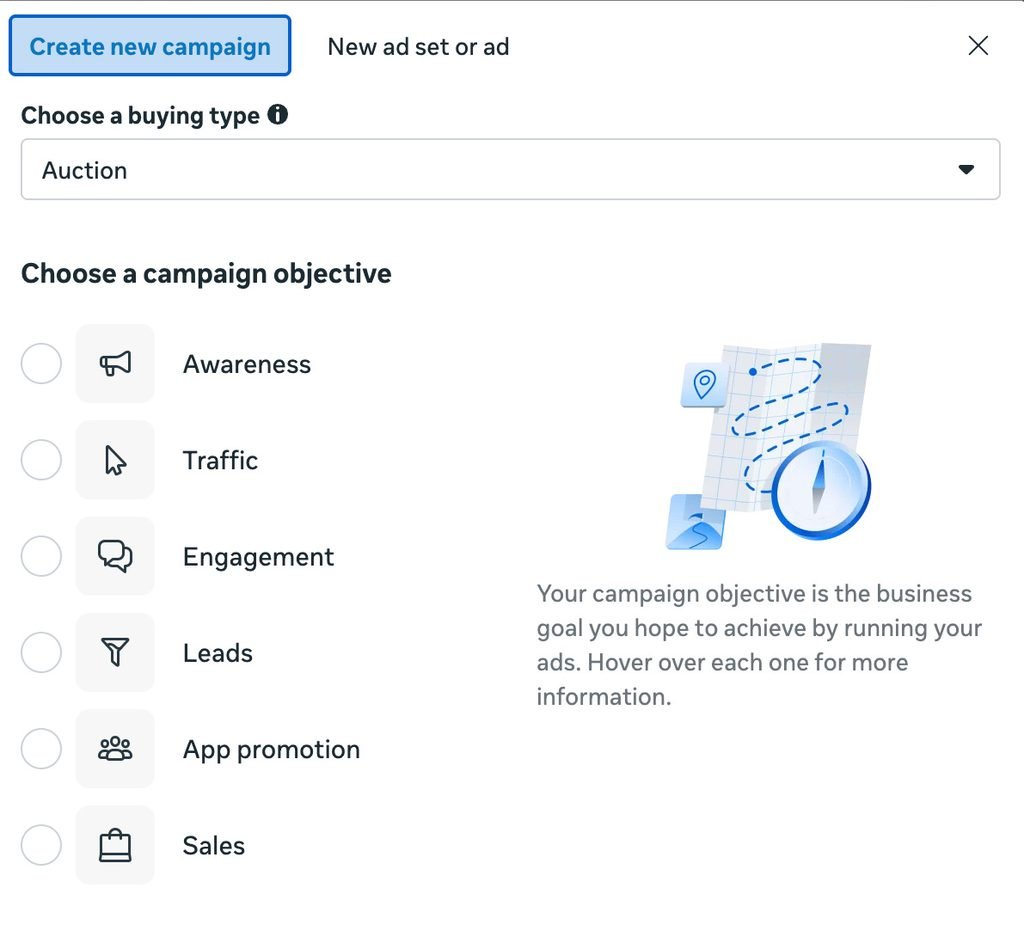
Choosing a campaign objective is one of the first strategic decisions you make in Meta Ads Manager. It is more than a label: your objective tells Meta what business outcome the campaign is intended to support. Meta currently organizes new campaigns around six objectives: Awareness, Traffic, Engagement, Leads, App Promotion and Sales.
The right choice depends on what you actually need from the campaign. If your goal is online sales, optimizing only for cheap clicks can produce a dashboard full of activity without the revenue you expected. If your goal is qualified enquiries, maximizing reach alone may not create enough prospects. The practical approach is to define the business outcome first, then choose the objective and measurement setup that best match it.
What Is a Meta Ads Objective?
A Meta Ads objective is the campaign-level outcome you select when building a campaign in Ads Manager. Meta’s current framework uses six outcome-based objectives. Each objective is designed around a different type of business result, from increasing awareness to generating website traffic, interactions, leads, app activity or sales.
Meta’s objective framework was consolidated from the older system of separate objectives. Older articles may still mention Brand Awareness, Reach, Video Views, Messages, Lead Generation, Conversions, Catalog Sales or App Installs as separate campaign objectives. Those legacy names can create confusion when you are following an older tutorial, so always check the current Ads Manager interface and Meta’s current documentation before setting up a new campaign.
Why Does the Meta Ads Objective Matter?
Advertising platforms do not treat every user action as equally useful for every campaign. A person who frequently clicks ads is not necessarily a person who buys products. A person who watches videos is not necessarily ready to submit a lead form. Your objective helps define the outcome the campaign is trying to achieve, which in turn affects the delivery and optimization choices available in the campaign.
This is why the cheapest headline metric is not automatically the most valuable result. A Traffic campaign can generate inexpensive clicks while producing weak sales. A Lead campaign can produce a low cost per lead while generating prospects that rarely become customers. The closer your campaign objective is to the business outcome you can reliably measure, the more meaningful your performance reporting becomes.
The 6 Meta Ads Objectives at a Glance
| Objective | Main purpose | Typical use cases | Key metrics |
| Awareness | Build awareness and reach relevant people | Brand launches, market entry, broad visibility | Reach, frequency, CPM, awareness-related results |
| Traffic | Send people to a destination | Websites, landing pages, content, destination visits | Landing-page views, clicks, CPC, CTR |
| Engagement | Generate interactions or supported engagement actions | Post engagement, video views, messages | Engagement, video views, messaging results |
| Leads | Generate prospects | Forms, calls, messaging, enquiries | Leads, cost per lead, qualified-lead rate |
| App Promotion | Acquire or re-engage app users | App installs and in-app actions | Installs, activation, in-app events |
| Sales | Drive measurable sales outcomes | E-commerce, subscriptions, bookings | Purchases, CPA/CAC, conversion value, ROAS |
These categories describe the campaign outcome, not a guaranteed performance level. Available conversion locations, performance goals and optimization options can vary by account, destination, region and Meta product changes.
1. Awareness Objective
The Awareness objective is designed for campaigns where being seen, remembered or recognized is the primary business requirement. It is relevant when you are introducing a brand, product, service, location or message to a broader audience.
- Launching a new brand or product
- Entering a new market or audience segment
- Building recognition before a conversion campaign
- Increasing exposure for a major announcement
Awareness should be evaluated using awareness-oriented metrics such as reach, frequency, CPM and relevant video or recall signals. It should not be judged using exactly the same primary KPI as a campaign whose direct purpose is to generate purchases.
2. Traffic Objective
The Traffic objective is designed to send people to a destination such as a website, landing page, app or another supported destination. It is useful when getting people to the destination is itself the immediate campaign goal.
- Promoting a blog article or resource
- Driving visits to a landing page
- Sending users to a website for product discovery
- Generating destination visits before a later conversion step
A common mistake is to interpret a low CPC as proof that a Traffic campaign is commercially successful. Clicks are only one step in the customer journey. If the business needs sales or qualified leads, evaluate what happens after the click.
3. Engagement Objective
The Engagement objective is designed for campaigns where interaction is the desired outcome. Depending on the campaign setup, supported outcomes can include post engagement, video views and messaging-related actions.
- Building social proof around content
- Encouraging people to interact with a post
- Generating video consumption
- Starting conversations when messaging is the intended outcome
Engagement can be valuable for community building and content distribution, but engagement volume should not automatically be treated as revenue. If the commercial goal is sales, connect engagement reporting to downstream leads, conversations or purchases where possible.
4. Leads Objective
The Leads objective is designed for businesses that want prospective customers to take a lead-generating action. Depending on the setup, that journey can involve instant forms, website forms, calls or supported messaging flows.
- Education and student enquiries
- B2B consultations
- Service businesses
- Quote or appointment requests
- Real-estate enquiries
The most useful lead-generation KPI is not always the number of raw leads. Lead quality matters. If your CRM or sales team can distinguish qualified leads from low-intent enquiries, connect that information back to campaign reporting.
5. App Promotion Objective
The App Promotion objective is designed for businesses whose conversion path depends on a mobile application. Depending on the setup and available measurement, campaigns can focus on acquiring app users and encouraging relevant in-app actions.
- App installs
- User activation
- In-app purchases
- Other measurable in-app events
Before scaling an app campaign, verify that app events are being measured correctly. Without reliable measurement, it becomes difficult to distinguish an inexpensive install from a valuable user.
6. Sales Objective
The Sales objective is designed for campaigns where the desired outcome is a measurable sales or conversion event. For an e-commerce business, this commonly means optimizing around the purchase journey when the relevant measurement signals are available.
- E-commerce purchases
- Subscriptions
- Bookings
- Catalog-driven sales
- Other measurable sales conversions
Sales campaigns are most useful when the conversion path is measurable. For websites, advertisers may use Meta Pixel and/or Conversions API where appropriate, alongside accurate event and value reporting. The technical setup depends on the website, commerce platform, privacy configuration and account.
Awareness vs Traffic vs Engagement
These three objectives are often confused because all three can create visible activity. The difference is the result the campaign is designed to prioritize.
| If the immediate goal is… | Consider… | Measure mainly… |
| Increase brand exposure | Awareness | Reach, frequency, CPM and awareness signals |
| Bring people to a destination | Traffic | Landing-page views, clicks, CPC and CTR |
| Generate interaction | Engagement | Engagement, video consumption or messaging results |
| Generate leads | Leads | Leads, cost per lead and qualified-lead rate |
| Acquire or activate app users | App Promotion | Installs, activation and in-app events |
| Drive purchases or other sales conversions | Sales | Purchases, conversion value, CPA/CAC and ROAS |
Leads vs Sales: What Is the Difference?
The easiest way to understand Leads versus Sales is to look at where the measurable conversion happens. If the immediate business outcome is a prospect—such as a consultation request, form submission, quote request or qualified conversation—the Leads objective can fit that stage of the funnel.
If the measurable business outcome is a purchase or another sales conversion, the Sales objective is more directly aligned with that outcome. The distinction is not about which objective is universally better; it is about whether the campaign is designed to acquire a prospect or drive a sales event.
How to Choose the Right Meta Ads Objective
1. Define the business outcome: Write the desired result in one sentence: “We need purchases,” “We need qualified enquiries,” “We need app installs,” or “We need more people to know the brand.”
2. Map the customer journey: Identify what should happen after the ad: a view, visit, interaction, form submission, conversation, install or purchase.
3. Check your measurement: Confirm that your website events, forms, app events, calls, messages or CRM process can capture the result you care about.
4. Choose the closest objective: Select the objective that best matches the outcome rather than choosing the option with the cheapest headline metric.
5. Define your KPI before launch: Decide what success means before spending the budget.
6. Measure downstream quality: Where possible, connect Meta results with CRM, sales and revenue data.
Why Cheap Clicks Do Not Always Mean Better Results
Cost efficiency only makes sense relative to the outcome being purchased. A low-cost click can be valuable when the business needs qualified website traffic. But if the business needs revenue, the more important question is whether those visitors eventually purchase.
Imagine two campaigns promoting the same product. Campaign A generates many inexpensive clicks but no purchases. Campaign B generates fewer clicks at a higher CPC but produces profitable orders. Looking only at CPC would make Campaign A appear cheaper, while a revenue-focused analysis would require a different set of questions. This is why objective, measurement and business KPI need to be considered together.
Meta Ads Objectives and the Marketing Funnel
A funnel can be useful for planning, but it should not be treated as a mandatory sequence. Some businesses may move directly from awareness to sales, while others need a longer consideration stage.
| Funnel role | Possible objective | Business question |
| Build awareness | Awareness | Do relevant people know the brand or offer exists? |
| Drive consideration | Traffic / Engagement | Are people visiting, watching, interacting or starting conversations? |
| Generate prospects | Leads | Are qualified prospects taking the next step? |
| Acquire app users | App Promotion | Are the right users installing and engaging with the app? |
| Generate revenue | Sales | Are people completing the desired sales event? |
Common Meta Ads Objective Mistakes
- Choosing the objective before defining the business goal: Start with the result, not the Ads Manager menu.
- Choosing Traffic because the CPC looks cheap: If the real goal is sales, evaluate the post-click conversion path.
- Measuring lead campaigns only by lead volume: Track qualified-lead rate and sales outcomes where possible.
- Treating engagement as revenue: Measure engagement separately from commercial conversion.
- Ignoring measurement quality: Check events, attribution, CRM handoff and data consistency.
- Comparing different objectives only by CPM or CPC: Compare each campaign against the KPI that reflects its intended outcome.
- Following outdated objective names: Older tutorials may use the legacy objective framework. Verify current Meta terminology before launching a new campaign.
Real-World Examples Different businesses may choose different objectives depending on the measurable outcome they need.
| Business | Goal | Likely objective | Primary measurement |
| Restaurant launch | Introduce a new venue to a local audience | Awareness | Reach, frequency, awareness/video signals |
| B2B agency | Generate consultation requests | Leads | Qualified leads, cost per qualified lead, booked calls |
| E-commerce store | Increase online purchases | Sales | Purchases, CPA/CAC, conversion value, ROAS |
| Content publisher | Bring readers to a new article | Traffic | Landing-page views, engaged visits, CPC |
| Mobile app | Acquire and activate users | App Promotion | Installs, activation, in-app events |
Meta Ads and the Scale of Social Media
Meta advertising operates inside a large global social-media ecosystem. DataReportal’s latest global update reports 5.79 billion active social media user identities worldwide in April 2026, equivalent to 69.9% of the world’s population. DataReportal notes that these figures represent user identities rather than necessarily unique individuals. DataReportal
In Malaysia, DataReportal’s Digital 2026 report says there were 30.7 million social media user identities in October 2025, equivalent to 85.0% of the country’s population. The same report says Meta’s advertising resources indicated 23.0 million Facebook users and 16.1 million Instagram users in Malaysia in late 2025. These are advertising-reach figures and should not be interpreted as equivalent to monthly or daily active-user figures. DataReportal Malaysia
How to Improve Meta Ads Results Beyond the Objective
Objective selection is important, but it is only one part of the advertising system. Creative quality, offer strength, landing-page experience, audience strategy, measurement and sales execution can all affect the final result.
- Test creative hooks, formats, offers and messages.
- Make the landing page consistent with the promise made in the ad.
- Verify events and downstream conversion tracking before scaling.
- Connect lead campaigns to CRM and sales data where possible.
- Use a clear testing framework so you can identify what caused a performance change.
- Report business outcomes alongside platform metrics.
Frequently Asked Questions
What is a Meta Ads objective?
A Meta Ads objective is the campaign-level outcome you select in Ads Manager. Current objectives include Awareness, Traffic, Engagement, Leads, App Promotion and Sales.
Which Meta Ads objective is best?
There is no single objective that is best for every campaign. Choose the objective that most closely matches the measurable business outcome you need.
Should an e-commerce store use Traffic or Sales?
If the business goal is purchases and reliable purchase tracking is available, a sales-focused campaign is more directly aligned with that outcome. Traffic is designed around sending people to a destination.
What is the difference between Leads and Sales?
Leads is designed around generating prospects and lead actions. Sales is designed around measurable sales or conversion outcomes. The appropriate choice depends on where the business’s measurable conversion occurs.
Can Engagement campaigns generate sales?
Yes. People who engage can later become customers. However, an Engagement campaign is designed around engagement outcomes, so sales should be measured separately rather than inferred from engagement volume.
Why are my clicks cheap but my sales low?
Clicks and purchases are different outcomes. Review the objective, landing page, offer, tracking and the full path from ad to checkout or lead conversion.
What should I track for Meta Ads?
Track the KPI that corresponds to the objective, then add downstream business outcomes where possible. For example: reach for awareness, landing-page views for traffic, engagement or messaging results for engagement, qualified leads for lead generation, app events for app promotion, and purchases or conversion value for sales.
Conclusion
The right Meta Ads objective is the one that most closely matches the result your business actually needs. Awareness is built around visibility and awareness outcomes; Traffic around destination visits; Engagement around interactions; Leads around prospect generation; App Promotion around app acquisition or activity; and Sales around measurable sales outcomes.
Choosing the objective should therefore begin with the business goal, not with the cheapest metric in Ads Manager. Once the objective and measurement setup match the intended outcome, creative testing, landing-page optimization, audience strategy and business-level reporting can do the rest.
Ready to Run Smarter Meta Ads?
Let Partow Ads help you build smarter campaigns, choose the right objectives, and turn your advertising budget into measurable results.
Categorise
Tags
#advertising (11) #advertising-agency (6) #advertising-strategies (4) #brand-story (1) Branding (7) digital marketing (7) Marketing (8) partow ads (4) social media campaign (1) Strategies (2)
Recent Posts
- Meta One Malaysia: Pricing, Plus Plans & Business Features

- ChatGPT Ads in Malaysia: Cost, Availability & How It Works?

- Does AI-Generated Content Get Less Reach on Social Media in 2026?

- Trend or Trap? A Brand’s Guide to Choosing Social Media Trends Without Losing Its Identity

- Brand Identity & Brand System: Building a Strong, Consistent Brand



Leave a Reply